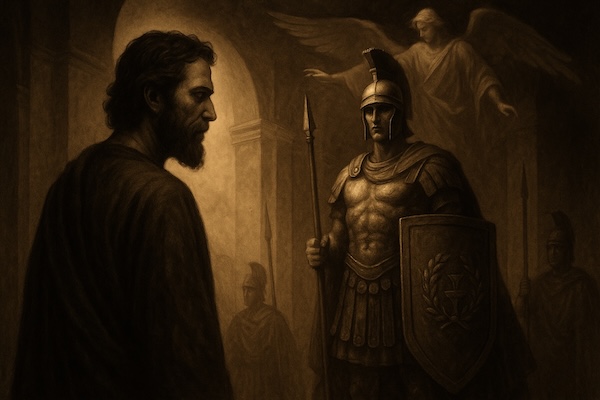
How Romans 13 Has Been Distorted to Enslave God's Children
For centuries, Christians have been taught to bow before a power that, according to the Bible, serves their enemy. This lie is so deeply rooted that few dare even to question it. Yet now it is time to speak plainly and fearlessly about this matter as well. "And ye shall know the truth, and the truth shall make you free" (John 8:32, KJV). This article exposes a centuries-old deception that now reaches its climax in the new UT2020 Bible translation.
The first two verses of Romans 13 have been turned into a weapon against God's children. The original Greek text speaks of ordering oneself, but the translations speak of servitude. The original text acknowledges the existence of authority, but the translations turn it into a divine mandate. The most egregious assault is the UT2020 translation, orchestrated by the Finnish Bible Society and the Church Central Fund, which inserts words into the Holy Text of Scripture that do not exist there, transforming Paul's teaching into a manifesto for totalitarianism¹.
When we examine the course of history, we see a clear pattern. Constantine's alliance between church and state in 313 AD marked a turning point². Suddenly the same state that had persecuted Christians wanted their allegiance. Romans 13 was ripped from its context and forged into a tool of power. Dietrich Bonhoeffer, confronting Nazi rule, understood this deception. He wrote from prison: "The state's demand for absolute obedience is anti-Christian"³.
When we return to the original text, the truth hidden there is astonishing. Paul uses the word ἐξουσία (exousia) to describe earthly authority in Romans 13:1. The exact same word appears in Ephesians 6:12, where Paul reveals: "For we wrestle not against flesh and blood, but against principalities, against powers [ἐξουσίας], against the rulers of the darkness of this world, against spiritual wickedness in high places" (KJV). How can the same word mean both God-ordained authority and our spiritual enemies? The answer is simple: Paul never taught blind obedience⁴.
Greek scholarship reveals more. The word ὑποτάσσω (hypotassō), translated as "be subject to," is originally a military term. It means to arrange oneself in order, to fall into rank — not to be enslaved. The same word is used when Paul exhorts wives to "order themselves" with their husbands, not beneath them. It is about order, not about the absolute authority of the state⁵.
Understanding this, the UT2020 translation stands exposed as outright deception. Where the original text says "Let every soul be ordered under the higher authorities," the new translation proclaims: "Everyone must submit to the orders of rulers and officials." The word "orders" has been added — it does not even exist in the original text. The phrase "For there is no power but of God" is twisted so that God's permission becomes God's active will⁶.
Most revealing of all is the phrase "The authorities are on God's mission." The original text uses the word διάκονος (diakonos) — servant — but UT2020 transforms officials into near-sacred agents who are "on God's mission." This is the same spirit that drove the medieval church to bless the Inquisition⁷.
Jacques Ellul, the Christian anarchist, saw this more clearly than most. He wrote: "The state is part of the world whose prince is Satan. The Christian must live in this reality but not submit to it"⁸. Oscar Cullmann studied the early Christian relationship to the state and concluded that Christians recognised only one Lord: Christ. That is why they were persecuted⁹.
The historical evidence is overwhelming. The early Christians refused to say "Caesar is Lord" (Kyrios Kaisar), even when it cost them their lives. They understood what we have forgotten: there is only one Lord, Jesus Christ¹⁰. The martyrdom of Polycarp testifies to this. When he was commanded to curse Christ and swear by the emperor, he replied: "Eighty-six years have I served Him, and He has done me no wrong. How can I blaspheme my King?"¹¹
When Constantine "converted," the great deception began. Eusebius records how the emperor "united" church and state¹². In reality, the church sold its birthright just as Esau sold his to Jacob for a bowl of stew. Romans 13 became a tool for legitimising power. Karl Barth, writing under Nazi rule, recognised this:
"When the state demands that which belongs to God, the Christian must resist"¹³.
Why is this teaching so dangerous right now? Because we live in times when the state demands ever more. Digital surveillance, social credit systems, compulsory vaccinations, ideological indoctrination — all justified in the name of "the common good"¹⁴. The UT2020 translation paves the way for this by declaring that the orders of officials must be obeyed because they are "on God's mission."
A concrete example reveals where this leads. In Finland, a Christian family with seven children who were practising entirely lawful home education were persecuted so intensely that they were forced to flee the country. Fifty officials were mobilised, a thousand pages of documents were produced, an international arrest warrant was issued¹⁵. Their crime? They refused to submit to the state's ideological control over the upbringing of their children.
Note the masterclass in newspeak in this case. According to the police, "the primary objective of the authorities is to ensure that the family's children receive all the help, support, and protection to which they are entitled"¹⁶. But what did this "help" mean in practice? A seven-month-old baby was separated from its nursing mother. "Support" meant tearing the family apart. "Protection" meant removing the children from a loving home¹⁷.
Paul's words in Colossians reveal the truth that the system wants to hide: "Who hath delivered us from the power of darkness, and hath translated us into the kingdom of his dear Son" (Col. 1:13, KJV). Note: we have ALREADY been translated. This is not a future promise but an accomplished fact. The Greek uses the aorist tense — a completed action¹⁸.
If we have been translated into the Son's kingdom, how could we be subject to the powers of darkness? Jesus Himself revealed the truth to Pilate: "My kingdom is not of this world" (John 18:36, KJV). He did not say He had no kingdom, but that it is not OF THIS world. We are citizens of His kingdom¹⁹.
Stanley Hauerwas has written: "The church is a political community that challenges every other political community by its very existence"²⁰. This is the reason for persecution. The Kingdom of God is a threat to every earthly power because it exposes their temporality and limited authority.
The Book of Acts shows us the way. When Peter and John were forbidden to speak in the name of Jesus, they answered: "Whether it be right in the sight of God to hearken unto you more than unto God, judge ye" (Acts 4:19, KJV). Later, when they were again brought before the council, Peter declared: "We ought to obey God rather than men" (Acts 5:29, KJV). This was not the exception but the rule²¹.
N.T. Wright, one of the leading Pauline scholars, has demonstrated that Romans 13 was written in a context where Paul warns against pride and vengeance. These verses are not a standalone teaching on absolute obedience but part of a broader instruction on how Christians live in a hostile world without resorting to violence²².
Let us return to the Greek text. Paul says the authorities are "ordained of God" (τεταγμέναι, tetagmenai), but the same verb is used when God "ordained" Pharaoh's power — the very power Moses fought against! God permits even wicked authorities, but that does not make them holy²³.
William Stringfellow, a lawyer and theologian, lived through America's Vietnam War era. He witnessed how Romans 13 was used to justify war crimes. He wrote: "The biblical view of power is that it is a fallen, demonic force that God uses temporarily to prevent chaos"²⁴. Power is not sacred but permitted — a vast difference!
When we grasp the lesson of history, we see a clear pattern. Every time the church has allied with the state, the result has been corruption and violence. The Crusades, the Inquisition, the witch trials, the justification of slavery, the persecution of Jews — all were carried out under the shadow of Romans 13²⁵. Hitler used the same text to demand the obedience of Christians²⁶.
The UT2020 translation is not an innocent mistake but part of a continuum. The UT2020 translation would fit seamlessly into Nazi Germany as it stands, creating a perfect bridge between a fascist and totalitarian regime and a state church — and this is what we are now building in Finland. UT2020 is one milestone among many preceding the times of separation that begin in May 2026. It prepares Christians to accept totalitarian control. When "the authorities are on God's mission," who dares resist? When their "orders" must be obeyed, where is the line? When resistance is resistance against "God's ordinances," who dares say no?²⁷
Jesus showed us another way. When the Pharisees tried to trap Him with a question about taxes, He answered: "Render therefore unto Caesar the things which are Caesar's; and unto God the things that are God's" (Matt. 22:21, KJV). This is not a call to divide our allegiance but to recognise that ALL belongs to God. Caesar holds only what God permits²⁸.
In the light of this truth, the persecution of home-educating families takes on new meaning. They understood that children belong to God, not the state. "Train up a child in the way he should go: and when he is old, he will not depart from it" (Prov. 22:6, KJV). When the state demands a monopoly over the minds of children, Christian parents say no. That is why they are persecuted²⁹.
John Howard Yoder, the Mennonite theologian, studied the political message of Jesus. He demonstrated that Jesus was not apolitical but profoundly political — He proclaimed an alternative kingdom. This is a threat to every earthly power³⁰. That is why Jesus was crucified as a political rebel, even though His rebellion was spiritual.
The truth of Ephesians illuminates everything: "For we wrestle not against flesh and blood, but against principalities, against powers, against the rulers of the darkness of this world, against spiritual wickedness in high places" (Eph. 6:12, KJV). These ἐξουσίαι (powers) are the same ones that Romans 13 addresses. Paul does not contradict himself — he reveals a complex reality³¹.
Historic Christianity has always understood this tension. Tertullian wrote: "We cannot swear allegiance to the emperors"³². Origen taught that Christians are "citizens of another kingdom"³³. Augustine distinguished between "the City of God" and "the earthly city"³⁴. They all understood: the Christian lives in the tension between two kingdoms.
Modern translation work, however, has obscured this truth. When we compare different translations, we see a progressive slide toward state worship. The 1992 translation was already problematic, but UT2020 crosses every line: it does not merely translate but adds, alters, and distorts³⁵.
When we examine our own times, we see the beast rising. Digital identity, social scoring, central bank digital currencies — all of it prepares the way for total control³⁶. And the church, blinded by the misunderstanding of Romans 13, stands ready to bless it all in the name of "God's will."
There is a small remnant that understands the truth. Like the home-educating family that chose flight over submission. Like those Christians who refuse to acknowledge the supremacy of the state in matters of conscience. Like those who understand that they are "strangers and pilgrims" (1 Pet. 2:11, KJV) in this world³⁷.
The truth is radical: the Christian is not subject to any earthly power in the way that UT2020 teaches.
We respect order, we pay taxes, we live in peace — but we acknowledge only one Lord. When the state demands what belongs to God, we say no. When it demands the souls of children, we say no. When it demands the enslavement of conscience, we say no³⁸.
Dietrich Bonhoeffer paid with his life for this understanding. In his final letter he wrote: "I have learned that only by living fully in this world can one learn to believe"³⁹. He lived in the world but was not of it. He respected order but resisted evil. He understood Romans 13 rightly.
The purpose of this article is not to incite rebellion but to reveal the truth. God's children are called to freedom, not to slavery. "Stand fast therefore in the liberty wherewith Christ hath made us free, and be not entangled again with the yoke of bondage" (Gal. 5:1, KJV). This freedom is not freedom of the flesh but of the spirit. It is the freedom to serve God without fear⁴⁰.
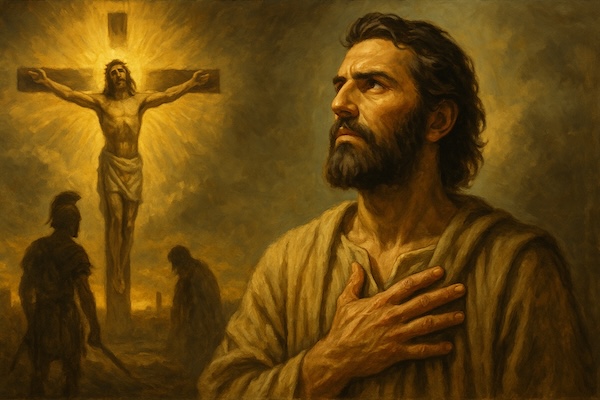
Let us return one final time to the words of Jesus: "If ye continue in my word, then are ye my disciples indeed; And ye shall know the truth, and the truth shall make you free" (John 8:31–32, KJV). This truth exposes the abuse of Romans 13. This truth sets us free from false obedience. This truth makes us truly free.
The question is this: will we acknowledge the truth or continue in bondage? Will we recognise that we are citizens of the Son's kingdom or submit to the powers of darkness? Will we believe the Word of God or the translations of men? The choice is ours, but the consequences are eternal.
"Woe unto them that call evil good, and good evil; that put darkness for light, and light for darkness" (Isa. 5:20, KJV). The UT2020 translation does precisely this. It calls slavery obedience, submission piety, and state worship the will of God — but the truth is free, and it sets free all who receive it.
As citizens of the Kingdom of God, we acknowledge no earthly power as our highest authority. We serve only one Lord, Jesus Christ. And because of this confession, the world hates us, as it hated Him. But "fear not them which kill the body, but are not able to kill the soul" (Matt. 10:28, KJV). Our victory is certain, for "the prince of this world is judged" (John 16:11, KJV).
Time is short and the choice must be made. Either we stand in truth or we fall into lies. Either we are free in Christ or slaves of the world. Either we confess Jesus as Lord or we bow to the beast. There is no middle ground. "Choose you this day whom ye will serve" (Josh. 24:15, KJV). As for me and my house, we will serve the Lord.
References:
- UT2020 Bible Translation. Finnish Bible Society and Church Central Fund, 2020.
- Grant, Michael. Constantine the Great: The Man and His Times. Scribner's, 1994. pp. 157-189.
- Bonhoeffer, Dietrich. Letters and Papers from Prison. Ed. Eberhard Bethge. Fortress Press, 2010. p. 382.
- Bauer, Walter et al. A Greek-English Lexicon of the New Testament (BDAG). 3rd ed. University of Chicago Press, 2000. pp. 352-353.
- Kittel, Gerhard, and Gerhard Friedrich, eds. Theological Dictionary of the New Testament (TDNT). Trans. Geoffrey W. Bromiley. Eerdmans, 1964-1976. Vol. 8, pp. 39-46.
- Textus Receptus and Nestle-Aland Novum Testamentum Graece, 28th edition. Deutsche Bibelgesellschaft, 2012.
- Peters, Edward. Inquisition. University of California Press, 1989. pp. 40-65.
- Ellul, Jacques. Anarchy and Christianity. Trans. Geoffrey W. Bromiley. Eerdmans, 1991. p. 45.
- Cullmann, Oscar. The State in the New Testament. Charles Scribner's Sons, 1956. pp. 50-70.
- Martyrdom of Polycarp. Trans. J.B. Lightfoot. Early Christian Writings.
- Ibid., 9:3.
- Eusebius. The History of the Church. Trans. G.A. Williamson. Penguin Classics, 1989. Book 10.
- Barth, Karl. Church and State. Trans. G. Ronald Howe. Greenwood Press, 1976. p. 23.
- Zuboff, Shoshana. The Age of Surveillance Capitalism. PublicAffairs, 2019.
- MTV Uutiset. "Tommy ja Karoliina saivat tuta kotiopetukseen kohdistuvat ennakkoluulot". 6.11.2020.
- Pohjanmaan poliisi. Tiedote kadonneen perheen etsinnöistä. 4.6.2024.
- Ilta-Sanomat. "Kadonneen pohjalaisperheen vanhemmat ovat esiintyneet aiemmin mediassa". 4.6.2024.
- Wallace, Daniel B. Greek Grammar Beyond the Basics. Zondervan, 1996. pp. 554-565.
- O'Donovan, Oliver. The Desire of the Nations. Cambridge University Press, 1996. pp. 146-157.
- Hauerwas, Stanley. The Peaceable Kingdom. University of Notre Dame Press, 1983. p. 99.
- Bruce, F.F. The Book of Acts (NICNT). Eerdmans, 1988. pp. 96-97, 116-117.
- Wright, N.T. Paul and the Faithfulness of God. Fortress Press, 2013. Vol. 2, pp. 1265-1283.
- Dunn, James D.G. Romans 9-16 (WBC). Word Books, 1988. pp. 761-764.
- Stringfellow, William. An Ethic for Christians and Other Aliens in a Strange Land. Word Books, 1973. p. 89.
- Carroll, James. Constantine's Sword: The Church and the Jews. Houghton Mifflin, 2001.
- Scholder, Klaus. The Churches and the Third Reich. Fortress Press, 1988. Vol. 1, pp. 98-125.
- Käser, Ernst. "Bible Translation and Political Ideology". The Bible Translator 52.2 (2001): 201-213.
- France, R.T. The Gospel of Matthew (NICNT). Eerdmans, 2007. pp. 828-833.
- Opetushallituksen tilastot kotiopetuksesta 2018. Opetushallitus.
- Yoder, John Howard. The Politics of Jesus. 2nd ed. Eerdmans, 1994. pp. 193-211.
- Arnold, Clinton E. Powers of Darkness. InterVarsity Press, 1992. pp. 87-103.
- Tertullian. Apology. Trans. T.R. Glover. Loeb Classical Library, 1931. 32.2.
- Origen. Against Celsus. Trans. Henry Chadwick. Cambridge University Press, 1953. 8.73.
- Augustine. The City of God. Trans. Marcus Dods. Modern Library, 2000. Book XIX.
- Koivisto, Jussi. "Käännösideologia ja valta". Teologinen Aikakauskirja 118.3 (2013): 245-261.
- Scott, Brett. Cloudmoney: Cash, Cards, Crypto, and the War for Our Wallets. Harper Business, 2022.
- Elliott, John H. A Home for the Homeless: A Social-Scientific Criticism of 1 Peter. Fortress Press, 1990.
- Cavanaugh, William T. Theopolitical Imagination. T&T Clark, 2002. pp. 19-44.
- Bonhoeffer, Dietrich. Letters and Papers from Prison. p. 486.
- Fee, Gordon D. Galatians (Pentecostal Commentary). Deo Publishing, 2007. pp. 184-190.