Personal Evil and the Liberation of Forgiveness
The Reality of Evil
We live in an age that wants to explain evil away. Psychology offers diagnoses. Sociology blames circumstances. Neuroscience points to brain structures. And there is truth in all of these — but not the whole truth.
There is evil that cannot be explained by disorders. There is cruelty that does not stem from trauma. There is coldness that is not the product of circumstance.
The Bible speaks to this directly. Paul writes: "For we wrestle not against flesh and blood, but against principalities, against powers, against the rulers of the darkness of this world, against spiritual wickedness in high places." (Eph. 6:12, KJV)
This is not metaphor. This is a description of reality.
The Face of Evil
Personal evil does not always look the way we expect. It does not dwell only in wars and genocides. It dwells in everyday choices made consciously, repeatedly, without remorse.
It shows in the person who uses those closest to them as instruments. It shows in manipulation disguised as love. It shows in a lie that, repeated often enough, begins to feel like truth. It shows in coldness that comes not from an inability to feel, but from an unwillingness to care.
The worst evil does not scream. It whispers. It does not break down doors. It slips in through trust. It does not look like a monster. It looks familiar, safe, even loving.
Jesus knew this. He said: "Ye are of your father the devil, and the lusts of your father ye will do. He was a murderer from the beginning, and abode not in the truth, because there is no truth in him. When he speaketh a lie, he speaketh of his own: for he is a liar, and the father of it." (John 8:44, KJV)
The Burden of the Victim
When you encounter personal evil, it leaves its mark. Not only the visible wounds, but the invisible ones. Distrust. Fear. Shame that is not yours but clings to you nonetheless. Questions with no answers: why me, why this, why anyone.
And then comes the temptation as old as humanity itself: hatred. Revenge. Bitterness.
These feelings are understandable. They are human. But they are also a prison. When you carry hatred, you carry the perpetrator with you. When you nurse revenge, you give them power over your life. When you remain in bitterness, you are still bound to what was done to you.
Evil wins twice: first in the act, then in the heart of the victim.
The Paradox of Forgiveness
Forgiveness is not what we think it is.
It is not forgetting. It is not acceptance. It is not making excuses. It is not the victim's responsibility to "move on." It is not even a feeling.
Forgiveness is a decision. A decision to sever the bond that ties you to the perpetrator. A decision to stop carrying a burden that is not yours. A decision to free yourself from a prison that someone else built.
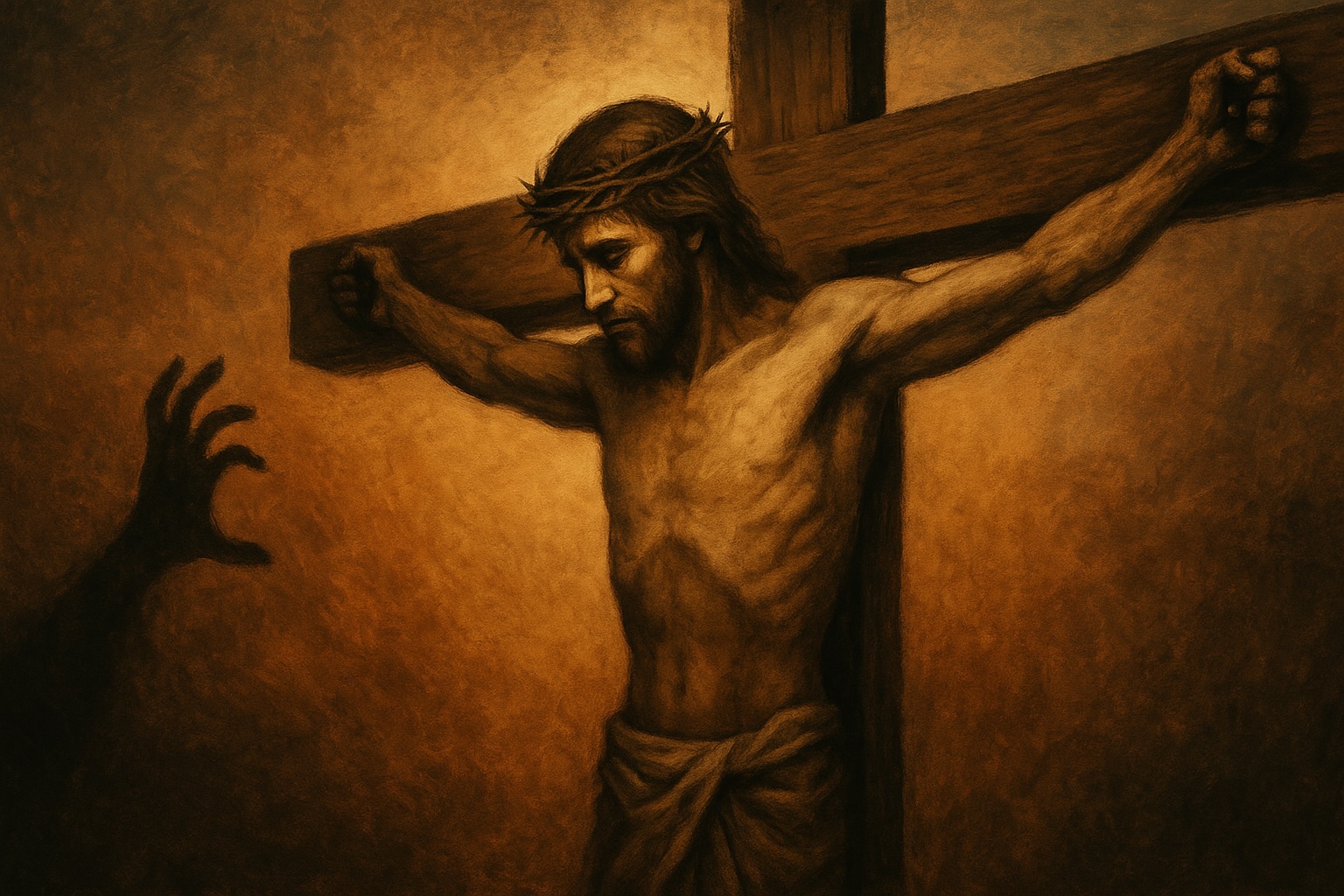
Jesus said on the cross: "Father, forgive them; for they know not what they do." (Luke 23:34, KJV)
This was not a sign of weakness. This was the ultimate victory. In the midst of extreme suffering, in the midst of violence and mockery, he refused to give hatred power. He refused to carry their evil in his heart.
And so he was free of them. Though his body was on the cross, his spirit was free.
They Know Not What They Do
This is perhaps the hardest part of forgiveness: understanding that the perpetrator often does not see their own evil.
A person who has surrendered to evil loses the ability to see themselves clearly. They construct a narrative in which they are justified, a victim, even a hero. They do not see the destruction they leave behind. Or if they do, they explain it away.
This does not absolve them of responsibility. A person is accountable for their choices, even if they have become blind to the consequences. But it frees you from the expectation that they will ever understand. That they will apologise. That they will change.
Forgiveness does not require the perpetrator's repentance. It requires only your decision.
The Path of Forgiveness
Forgiveness does not happen in an instant. It is a process that demands time, honesty, and often support.
The first step is to acknowledge what happened. No excuses, no minimising, no denial. Evil deserves to be named. Only when you see it clearly can you choose not to carry it.
The second step is to give yourself permission to feel. Anger, grief, fear, confusion — all of it. These feelings are not wrong. They are evidence that you were wronged — but they are visitors, not residents. Let them pass through you. Do not build them a home.
The third step is the decision. Not a feeling, but an act of will. You decide that you will not carry this. You decide that you will not give the perpetrator power over your life. You decide to free yourself, even if the perpetrator never sets you free.
And the fourth step is repetition. Forgiveness is not a one-time event. It is a daily choice. When the memories rise, when hatred calls, when bitterness knocks at the door — you choose again. And again. And again.
Freedom
When forgiveness finally takes root in the heart, something remarkable happens.
You are no longer a victim. You are no longer bound to what was done to you. The past is still true, but it no longer defines the future. The scars are still visible, but they have healed.
And then you notice something unexpected: you are freer than the perpetrator.
They still carry their evil. They still live in their lie. They are still imprisoned in their own darkness. But you are out. You see the light. You can breathe.
Paul wrote: "Be not overcome of evil, but overcome evil with good." (Rom. 12:21, KJV)
This is the ultimate victory over evil. Not revenge. Not hatred. But the refusal to carry what someone else did to you. Liberation from a prison you did not build. A life that continues — brighter than before.
In Closing
Personal evil is real. Many encounter it — more than we dare to admit. And it leaves marks that do not heal on their own.
But forgiveness is also real. It is God's gift to those who have suffered. It does not undo what was done. But it opens a way out of the darkness.
And perhaps, after all of this, we understand better why Jesus taught us to pray: "And forgive us our debts, as we forgive our debtors." (Matt. 6:12, KJV)
Forgiveness is not optional. It is the path to life.
Truth takes time. Lies are in a hurry. And love is patient.