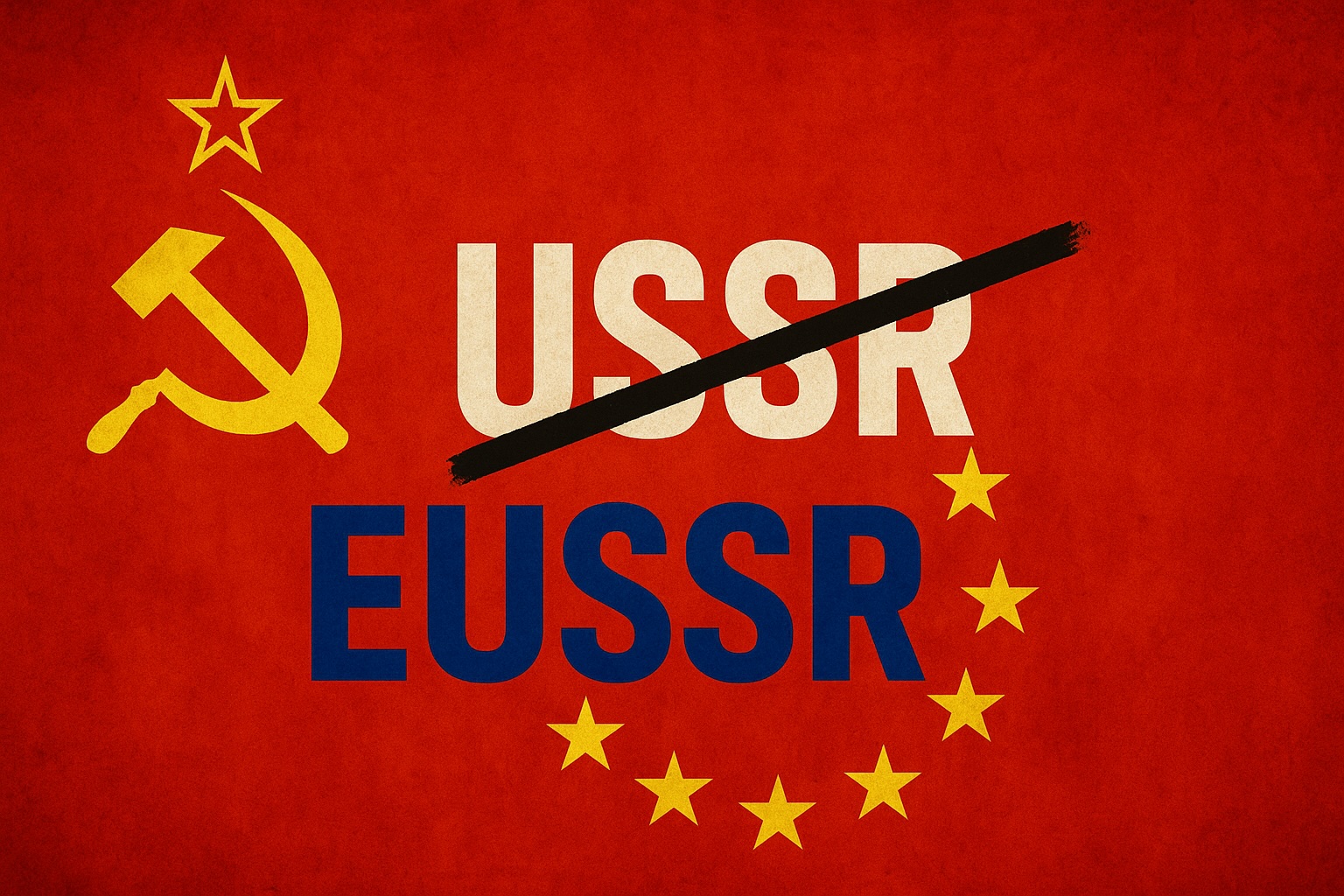
Soviet Secret Archives Reveal: The EU Was Built According to a Communist Blueprint
Vladimir Bukovsky knew what he was talking about. The man who spent 12 years in Soviet psychiatric prisons and labour camps stood before the Brussels Parliament in 2006 and declared: "The EU is a monster that must be destroyed, the sooner the better, before it develops into a full-fledged totalitarian state"¹. His book "EUSSR" had found a publisher only in a small independent press — the major publishers did not dare touch it². The dissident's warning echoed down empty corridors. Europe's elite smiled politely and continued on their way toward "ever closer union."
Bukovsky had read the secret Soviet archives in 1992 while preparing his testimony for a trial to determine whether the Communist Party was a criminal organisation³. The documents revealed an astonishing truth, which he published together with Pavel Stroilov in their book "EUSSR: The Soviet roots of European integration"⁴. The book's revelations are based on the Gorbachev Foundation archives, to which the authors gained exceptional access before they were sealed⁵.
On the fateful day of 26 March 1987, the Soviet Politburo made a decision that would determine Europe's destiny for decades. Gorbachev formulated the strategy succinctly: "To strangle in embrace"⁶. The concept already had a name within the inner circle: "Common European Home." Soon it would be known across the entire world.
The structural similarity between the Soviet Union and the EU is no coincidence — it was entirely by design. The book reveals that in the late 1980s, Gorbachev and Western socialists secretly discussed European integration as a way to rescue the idea of socialism⁷. As Alessandro Natta, leader of the Italian Communist Party, stated in Moscow in January 1986: "The attempt at democratic reforms in one country, such as France, is very difficult unless it is supported by similar attempts in other countries... The only solution is to impose socialism on your competitors as well"⁸.
Both systems were born on promises of peace, prosperity, and unity. In both, real power was concentrated in a small, unelected elite. In the Soviet Union, the Communist Party's Politburo made the decisions, which the Supreme Soviet rubber-stamped. In the EU, the unelected Commission — chosen without a popular vote — proposes laws that Parliament can only accept or reject, but never amend⁹. The European Parliament cannot initiate legislation, just as the Supreme Soviet could not challenge Party decisions.
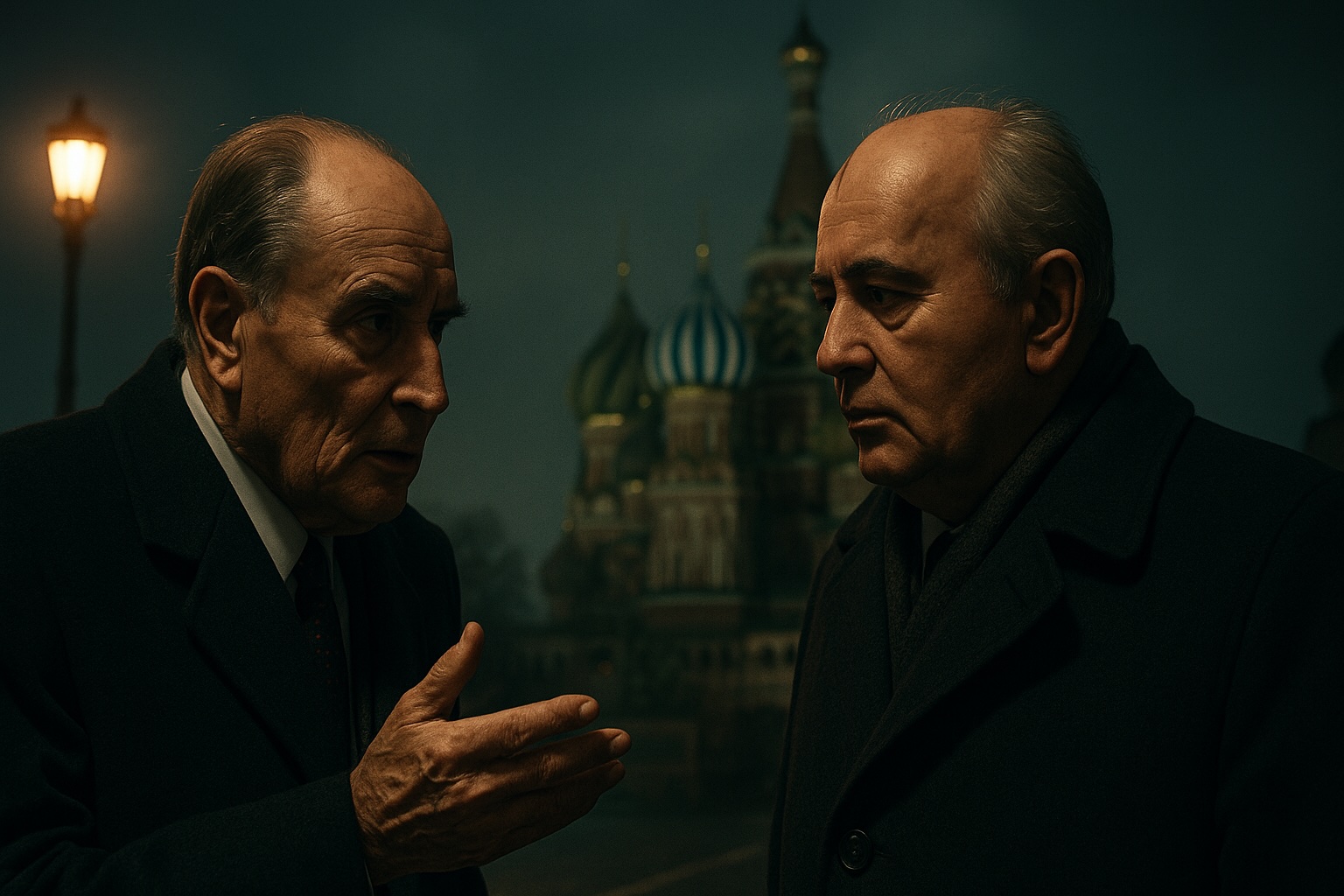
What is extremely revealing is how French President François Mitterrand expressed his full support for the project. In November 1988, he told Gorbachev in Moscow: "The construction of the Common European Home is a great idea... Personally, I consider the realisation of this idea my highest priority"¹⁰. He continued: "Europe, united within the framework of the EEC, is only the first step toward the true goal, which will take 25, 50 years or perhaps the whole century to achieve. The true goal is the whole of Europe"¹¹.
Economic integration serves as a Trojan horse for political unification in both systems. The Soviet Union's Gosplan decided what every factory produced and at what price. The EU's common currency, the euro, and its growing shared debt bind member states together with economic chains stronger than tanks. Mario Draghi's recent report demands 750–800 billion euros in annual "investments" in the name of EU competitiveness¹². A sum that would exceed the Union's entire budget fivefold. Five-year plans have given way to "strategic investment programmes," but the logic remains the same: centrally planned economics.
The most striking revelation concerns the Trilateral Commission and its role in the EU's federal development. In January 1989, a delegation visited Gorbachev: among them Rockefeller, Kissinger, Nakasone, and Giscard d'Estaing. Giscard stated directly: "Western Europe is undergoing perestroika, transforming its structures. It is hard to say exactly when this will happen: in five, ten, or twenty years, but a new modern federation will emerge in Western Europe. That is where we are heading"¹³. This was said before the Maastricht Treaty had even been drafted, let alone any referendums held!
Sebastian Tynkkynen's post on X on 15 July 2025 about the EU's BEFIT system — a "harmonised" corporate tax framework — takes on new meaning in this light¹⁴. It is part of the same original plan, at the end of which Brussels claims the right to tax directly. Behind the mask of a harmless technical reform lies a power grab that would reduce member states to mere administrative districts under central authority.
German Social Democrat leader Hans-Jochen Vogel rushed to Moscow in May 1988 to proclaim: "Perestroika is an aid to us all, to the whole progressive movement in the West... It removed many obstacles from the path of cooperation between left-wing forces"¹⁵. Socialist International chairman Willi Brandt went even further. He reported to Gorbachev in October 1989 like a pupil to his teacher, asking humbly: "I would be extremely grateful if you could tell us what you expect from the West and from us Social Democrats in helping perestroika"¹⁶.
The war in Ukraine has exposed the EU's true nature with striking clarity. A crisis that Brussels never let go to waste has accelerated integration at an unprecedented pace. Common defence, once a forbidden topic, is now the order of the day. Defence Commissioner Andrius Kubilius speaks openly about an EU army¹⁷, and Finland's Minister of Finance Riikka Purra has already opened the door to EU defence debt¹⁸. History teaches that a common army demands a common command, a common command demands a common government, and a common government demands a common state.
Spanish Foreign Minister Francisco Fernández Ordóñez revealed the socialists' true agenda when he told Gorbachev in March 1989: "The success of perestroika means only one thing: the success of the socialist revolution in modern conditions"¹⁹. Felipe González himself developed the theory further in October 1990: "I have come to one strange conclusion. Upon coming to power, I had to fight with my party comrades to make them understand that the market economy is the best instrument for achieving our goals. Only the best instrument, not the goal itself"²⁰.
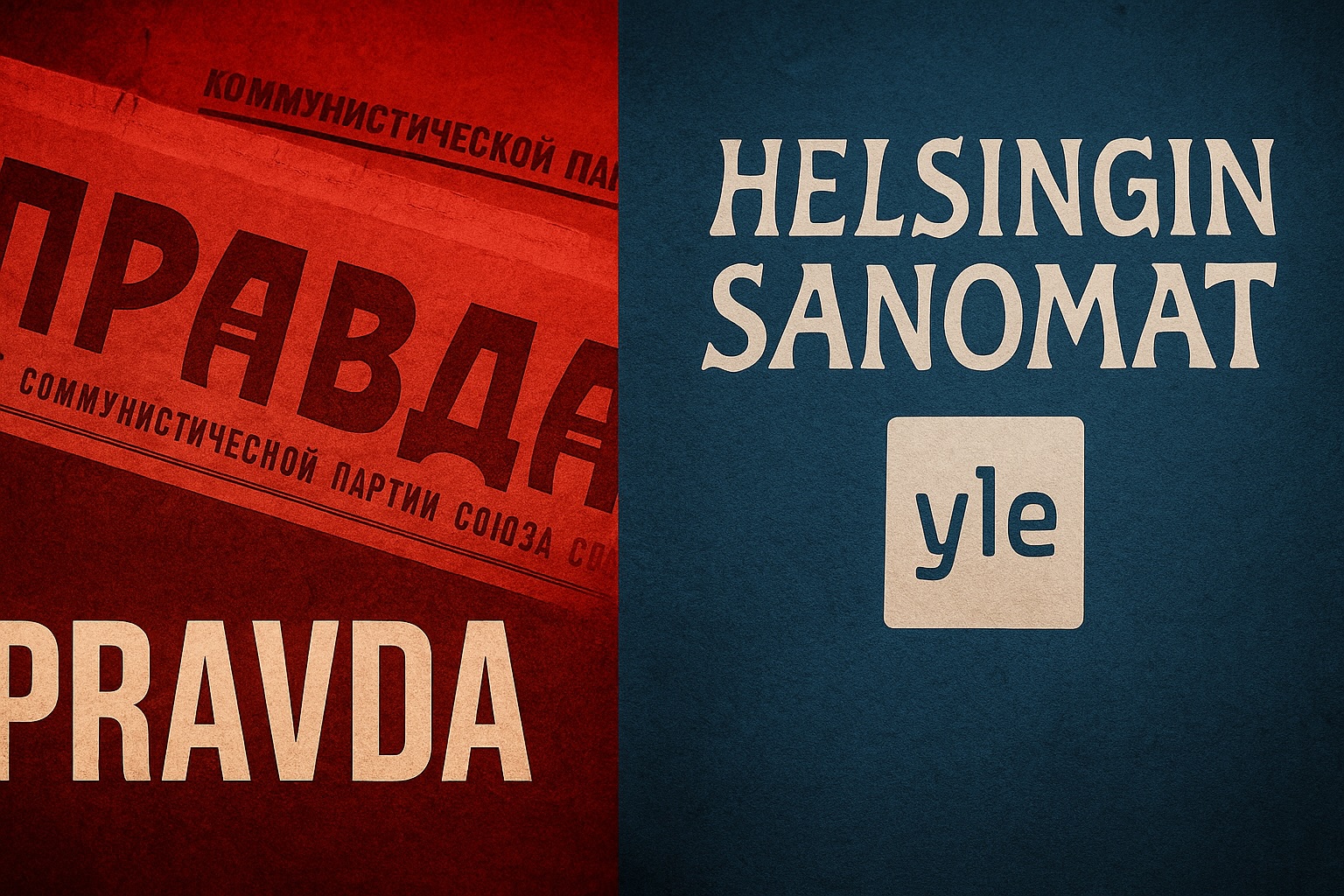
Control of information is central to both systems. In the Soviet Union, Pravda told the "truth"; in the EU, the media receives billions in support for "combating disinformation"²¹. The Digital Services Act (DSA) grants the Commission the power to define what constitutes "hate speech" and "disinformation"²². The European digital identity, being rushed through, lays the groundwork for a Chinese-style social credit system²³. Central bank digital currencies (CBDCs) complete the apparatus of control, where every transaction is traceable, every purchase controllable²⁴.
Education is key to creating the "new man." The Soviet Union created the "Soviet man"; the EU seeks to create the "European." The Erasmus programme, EU-funded teaching materials, the teaching of "European history" — all aimed at erasing national identities²⁵. This battle is fought above all in the minds and hearts of the people.
Bukovsky and Stroilov reach a devastating conclusion in their book: "The whole project is nothing but a cunning attempt by a bankrupt socialist nomenklatura to rescue its bankrupt utopian dream and its undeserved positions of power"²⁶. They continue: "When they ask us to vote for their numerous treaties, why don't they just say: Vote for socialism!"²⁷
"Democratic centralism" was the ideological cornerstone of the Soviet Union, where decisions were made at the top but discussed at the bottom. In the EU, this manifests as the acquis communautaire: 170,000 pages of regulations that new members must accept in their entirety without any room for negotiation²⁸. Criticism is permitted only before a decision; afterwards, total compliance is demanded. Brexit revealed how the system treats those who question this logic: punishment is swift and merciless.
Ken Livingstone MP revealed Labour's true agenda when he told Gorbachev's adviser Vadim Zagladin in August 1988: "Today there are very wide opportunities for developing mutually beneficial economic and intensive political contacts between Western Europe and the Soviet Union. Only one thing matters — to use these opportunities effectively"²⁹.
EU enlargement to the East bears a precise resemblance to Soviet expansion after the Second World War. In both cases, "liberation" meant imposing a new order. The former Eastern European countries traded Moscow's dominion for Brussels' dominion. Economic dependence on EU subsidies has replaced political dependence on the Kremlin³⁰.
The nomenklatura system is alive and well in the EU. In the Soviet Union, the Party controlled all significant appointments. In the EU, access to top positions requires the right background and networks: a technocratic elite that rotates between Brussels, Frankfurt, and national capitals³¹. Ursula von der Leyen's rise to the head of the Commission without a democratic mandate is reminiscent of the way Soviet leaders were selected behind closed doors³².
This nomenklatura system explains why democracy in the EU is nothing but a façade. In July 2025, something happened that in a democratic system would have led to immediate resignation: the EU Court of Justice ruled in May that Commission President Ursula von der Leyen had illegally concealed her text messages with Pfizer's CEO — messages that influenced the order of 1.8 billion COVID vaccines⁴¹. Yet Parliament voted confidence in her 360 to 175. In the Soviet Union, this was called "democratic centralism": a formal vote whose outcome is predetermined. In the EU, it is business as usual. When von der Leyen responded to the accusations by claiming the far right was seeking to "divide society," she used the same rhetoric as Soviet leaders: critics are "extremists," not officials caught breaking the law⁴². The system protects its own, just as in Moscow decades ago.
Digital control takes surveillance to a level the Soviet KGB could only dream of. Bukovsky warned as early as 2004: "And what about that sinister Europol... How many former East German Stasi officers end up working there?"³³ Now, 20 years later, the EU's digital identity, combined with the central bank's digital currency and AI-based surveillance, is making that dream a reality³⁴. "And he causeth all, both small and great, rich and poor, free and bond, to receive a mark in their right hand, or in their foreheads: And that no man might buy or sell, save he that had the mark" (Rev. 13:16–17, KJV).
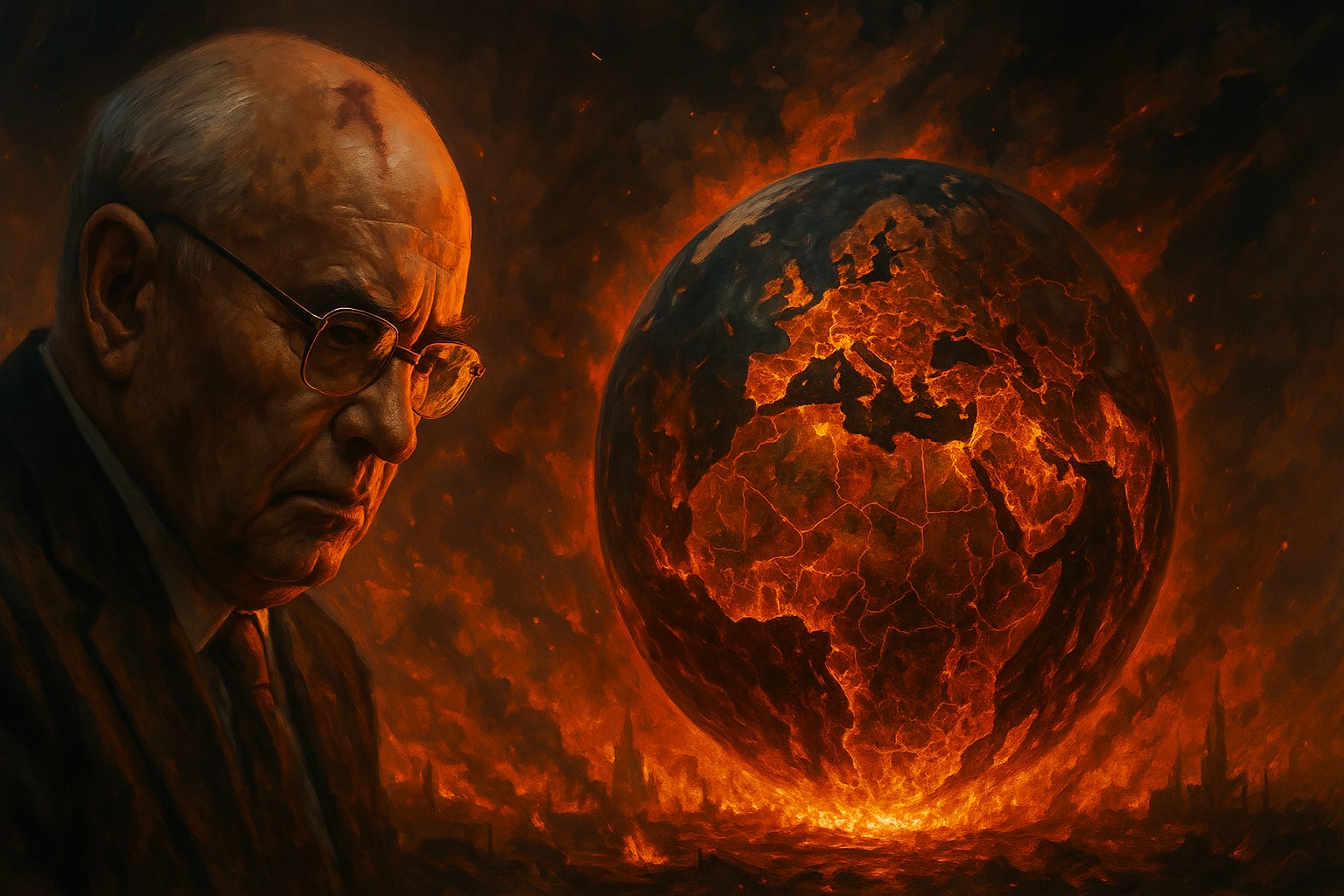
Gorbachev revealed his global vision to Argentine President Carlos Menem in October 1990: "We have to go further. After the construction of the European Home, many other homes of cooperation must follow... One of my aides once wrote that we have to create a world government. People laughed at him then. But now?"³⁵ He called the UN "the prototype of a world government"³⁶.
Bukovsky and Stroilov warn at the end of their book: "Utopians always deliver exactly the opposite of what they promise"³⁷. They predict: "Yes, it will collapse just as its prototype did, but in doing so it will bury us all under the rubble. And cleaning up the mess may take a generation"³⁸.
Vladimir Bukovsky died in October 2019, but his warning lives on³⁹. He saw the monster that many have learned to love. "The EU must be destroyed," he said, "and the sooner the better"⁴⁰. This was not nihilism but realism: a man who had seen one empire collapse recognised the signs in another. History does not repeat itself exactly, but it rhymes. The Soviet Union lasted 69 years. The EU is now 31 years old, and if things continue at this pace, it will be fortunate to see even half the Soviet Union's lifespan.
The EU's shadows are long and dark, stretching from Brussels' glass palaces to every village and town in every member state. But as the fate of the Soviet Union demonstrated, no human system is eternal. The question is not whether the EU will collapse, but when and how. And most importantly: will we be ready to reclaim our freedom when it does, or will we simply let power pass to the next body?
Bukovsky's legacy is not merely a warning from the past but a call to action in the present. Each of us must choose: do we silently accept the loss of sovereignty in the name of comfort, or do we stand for truth, even when it costs us? History remembers those who dared to say "no" to power. It also remembers those who let freedom slip through their fingers because resistance felt too hard. Which will we be?
Sources
You can download the original book EUSSR: The Soviet roots of European integration, here.
- The Brussels Journal. "Former Soviet Dissident Warns For EU Dictatorship." 27.2.2006. Bukovsky's speech at the European Parliament.
- Bukovsky, Vladimir & Stroilov, Pavel. "EUSSR: The Soviet Roots of European Integration." Sovereignty Publications, 2004. ISBN 0-9540231-1-0.
- Wikipedia. "Vladimir Bukovsky." Accessed 15.12.2024. Bukovsky's access to Soviet archives in 1992.
- Bukovsky & Stroilov, 2004, p. 1. Introduction.
- Bukovsky & Stroilov, 2004, p. 1. Reference to Gorbachev Foundation archives (Inventories 1-1; 2-2; 2-3 and 3-1).
- Bukovsky & Stroilov, 2004, p. 3. "Fateful decision" – Politburo meeting 26 March 1987.
- Bukovsky & Stroilov, 2004, pp. 7–16. Chapter "Crisis of Socialism".
- Bukovsky & Stroilov, 2004, p. 9. Alessandro Natta's meeting with Gorbachev, January 1986.
- European Union. "How the European Commission works." EU official website. Legislative process description.
- Bukovsky & Stroilov, 2004, p. 19. Mitterrand to Gorbachev, 26 November 1988.
- Bukovsky & Stroilov, 2004, p. 20. Mitterrand on European integration timeline.
- Draghi, Mario. "The future of European competitiveness." EU Commission Report, September 2024.
- Bukovsky & Stroilov, 2004, p. 25. Trilateral Commission meeting with Gorbachev, 18 January 1989.
- Tynkkynen, Sebastian MEP. X post about BEFIT system. 15.7.2025.
- Bukovsky & Stroilov, 2004, p. 22. H.-J. Vogel's visit to Moscow, May 1988.
- Bukovsky & Stroilov, 2004, p. 23. Willi Brandt to Gorbachev, October 1989.
- European Commission. "Defence Union." EU Defence initiatives documentation, 2024.
- Iltalehti. "Purra: Suomi voi tukea EU:n yhteisvelan ottamista puolustukseen." 13.5.2025.
- Bukovsky & Stroilov, 2004, p. 17. Francisco Fernández Ordóñez to Gorbachev, 3 March 1989.
- Bukovsky & Stroilov, 2004, p. 19. Felipe González to Gorbachev, 26 October 1990.
- European Commission. "Fighting disinformation." EU funding for media initiatives.
- European Union. "Digital Services Act." Official EU legislation, 2022.
- European Commission. "European Digital Identity." Official proposal and timeline.
- European Central Bank. "Digital euro project." CBDC development documentation.
- European Commission. "Erasmus+ Programme Guide." Educational integration initiatives.
- Bukovsky & Stroilov, 2004, p. 41. "Après le déluge" chapter conclusion.
- Bukovsky & Stroilov, 2004, p. 42. Authors' rhetorical questions.
- EUR-Lex. "The acquis communautaire." EU legal framework documentation.
- Bukovsky & Stroilov, 2004, pp. 21–22. Ken Livingstone meeting with Zagladin, 23 August 1988.
- European Court of Auditors. "EU funds to Eastern Europe." Dependency analysis reports.
- Corporate Europe Observatory. "The revolving doors of the EU institutions." 2023 report.
- Politico. "How Ursula von der Leyen became EU Commission President." July 2019.
- Bukovsky & Stroilov, 2004, p. 43. Warning about Europol.
- European Data Protection Supervisor. "Digital Identity Wallet concerns." 2023 opinion.
- Bukovsky & Stroilov, 2004, pp. 31–32. Gorbachev to Carlos Menem, 25 October 1990.
- Bukovsky & Stroilov, 2004, p. 32. Gorbachev on UN as world government prototype.
- Bukovsky & Stroilov, 2004, p. 42. "Utopians always deliver exactly the opposite."
- Bukovsky & Stroilov, 2004, p. 44. Prediction of EU collapse.
- The Times. "Vladimir Bukovsky obituary." 29.10.2019.
- The Brussels Journal. "Bukovsky: EU is a Monster That Must Be Destroyed." 27.2.2006.
- Yle Uutiset. "Von der Leyen sai jatkaa komissiossa, vaikka monet kokivat ärsytystä – Sebastian Tynkkynen äänesti vastaan." 10.7.2025 (updated 11.7.2025). The EU Court of Justice ruled in May that the concealment of the Pfizer messages was without legal basis.
- Yle Uutiset. "Von der Leyen: from the playbook of extremists." 10.7.2025. Von der Leyen's response to the vote of no confidence.